In four decades of placing buyers in inns, bed & breakfasts, and boutique lodging properties across North America, the word we’ve learned to read most carefully is “potential.” It’s not that potential is a bad thing. It’s that potential and opportunity are two very different propositions — and confusing the two is one of the most common, and most costly, mistakes aspiring Innkeepers make.
We see it on a consistent basis. A buyer falls in love with a property that has tremendous upside. The location is compelling, the physical plant is in good condition, the market is strong. What the listing doesn’t always make clear — or what the buyer doesn’t always stop to ask — is whether that upside is already waiting to be unlocked through skilled management, or whether it depends on a capital-intensive transformation that will take years and significant resources before it ever shows up on the bottom line. Understanding that difference should change how you evaluate every property you consider.
What We Mean by Opportunity
Opportunity exists in properties where value is already present but going unrealized. The market is established. The demand is real. The location suits the needs of the active or planned business model and the owner’s lifestyle requirements. What’s holding the business back isn’t the physical asset — it’s execution. Think of it as a traditional value-add investment: the fundamentals are sound, and with the right operator applying sharper strategy, performance improves fairly quickly.
The most common forms of opportunity we encounter look like this:
- Below-market room rates (ADR). The property is filling rooms, but charging meaningfully less than comparable properties in the same market.
- Weak online positioning. Outdated photography, thin listing descriptions, poor OTA management, or minimal direct booking infrastructure.
- Underused programming and spaces. Common areas, outdoor spaces, or existing amenities that could support events, packages, or experiences but aren’t being activated.
- Operational drift. Owners who are comfortable, fatigued, or simply ready to step back — and whose best years of active management are behind them.
The key distinction: none of these require construction. They require management, strategy, and attention. And that means the return timeline is dramatically shorter. One of the greatest opportunities is presented when an active Inn does not use any online booking engine
A Current Example: The Cedars of Williamsburg
Consider The Cedars of Williamsburg, a ten-room Inn located in active Colonial Williamsburg, Virginia. The property operates at roughly 63–64% occupancy with an ADR around $173 — numbers that reflect a stable, well-positioned business in one of the Mid-Atlantic’s most durable lodging markets. Williamsburg draws over four million visitors annually, benefits from year-round institutional and university demand, and was recently named the most underrated travel destination in the U.S. by Travel + Leisure.
What stands out here isn’t that something is broken. It’s that the market can clearly support more. An incoming owner with a sharper revenue management strategy — adjusting rates dynamically around peak university programming, heritage tourism periods, and event weekends — could meaningfully move ADR without adding a single room or pulling a single permit.
What does that look like in practice? Hypothetically, a 10–12% lift in ADR at the current occupancy level would translate to roughly $65,000–$80,000 in additional annual revenue. The capital investment required to accomplish that? A competent channel manager and revenue management tool — a cost measured in hundreds per month, not hundreds of thousands. Add modest guest room refreshes (new linens, updated fixtures, photography) at perhaps $20,000–$30,000, and you’ve meaningfully repositioned the property’s rate story in the market. Returns on that kind of targeted spending can begin within the first operating season.
That’s opportunity. You’re not building anything. You’re executing better. In fact, owners of this property identified this opportunity in recent past and have integrated a revenue management tool into their booking engine to start driving results.
What We Mean by Potential
Potential is different in kind, not just degree. Potential describes value that doesn’t yet exist — growth that requires the property to become something it currently isn’t. In commercial real estate appraisal, this maps to the concept of Highest and Best Use: the idea that a property could theoretically achieve greater value under a different use or configuration than it currently operates under.
Common potential-based strategies in boutique hospitality include:
- Adding guest rooms, suites, or new accommodations structures
- Building out event, wedding, or food & beverage facilities
- Repositioning the property into a higher market tier or brand identity
- Acquiring adjacent land to expand the footprint
- Major structural rehabilitation or systems overhaul
None of these are wrong strategies. Some of our most successful buyers have executed them brilliantly. But they carry a fundamentally different risk profile, capital requirement, and return timeline — and every buyer considering this path needs to understand that going in.
A Current Example: The Lilac Inn, Brandon, Vermont
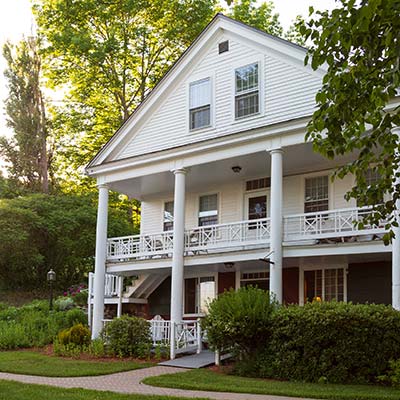
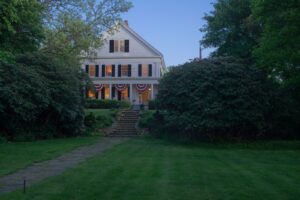
The Lilac Inn in Brandon, Vermont, is a compelling illustration of this dynamic. This is an 11,000 sq. ft. 1909 Georgian Revival estate — nine guest rooms, existing wedding and event infrastructure, a grand reception hall, and a front terrace – “The Arches” – that provide a powerful first impression. The property already operates as a destination wedding and events venue. The property was originally built as a summer estate by a renowned Chicago based architect and the bones are exceptional.
While the booking pace for upscale weddings and events in 2026 (and reaching into both 2027 and 2028) reflect the strength of this asset and business and its charming but steadily developing Vermont village location, serious potential exists in strategically expanding the food and beverage program. An incoming owner who wants to develop full-service dining, grow the events calendar (with emphasis on increasing rates in parallel with capital improvement projects), or add accommodations capacity would be making a real investment in transformation. That work – largely driven by the pursuit of adding accommodations – might require $400,000–$750,000 or more depending on the scope, involves permitting, contractor relationships, staffing buildup, and brand repositioning — and would realistically take two to four years before the returns from that investment are fully reflected in stabilized earnings.
That is not a reason to walk away from this property. It is a reason to walk in with clarity about what you’re signing up for — and to make sure your financing structure and personal runway are built for that timeline, not a shorter one. While the current business model and related income stream at the Lilac Inn provide a strong basis for development, a phased approach to development would support significant mid to long term growth.
The Returns Look Very Different — And So Does the Risk
This is the part of the conversation we want every buyer to sit with before they fall head over heels with the poetic verse and glossy illustrations in any offering memorandum.
Here’s a simplified but realistic comparison of how these two investment types tend to unfold:
Value-Add / Operational Opportunity
- Capital required: $20,000–$75,000 (refreshes, tools, marketing, minor improvements)
- Timeline to meaningful revenue lift: 6–18 months
- Risk profile: Lower — performance depends on your skill, not permit approvals or construction timelines
- Exit story: A stabilized, growing business with a clean operating history is among the strongest assets you can bring to market
Capital Improvement / Potential Play
- Capital required: $200,000–$1,000,000+ depending on scope
- Timeline to stabilized returns: 2–5 years
- Risk profile: Higher — execution risk, financing risk, market timing, and the unknowns of any significant construction project
- Exit story: High ceiling, but only if the transformation is complete and the numbers are fully realized before you sell
Neither profile is inherently better. What matters is whether the investment matches your capital, your skills, and your desired ownership timeline. A buyer with deep hospitality operations experience, patient capital, and a genuine vision for a property’s Highest and Best Use can create extraordinary value through a potential play. A buyer who wants to generate strong cash flow in year two, or who is financing with a traditional SBA loan that expects debt service coverage from day one, should be looking at opportunity — not potential.
When the Hard Work Is Already Done
There’s a third scenario worth naming — and it’s one of our favorites to present to buyers who want strong fundamentals without a significant project on their plate.
Liberty Hill Inn in Yarmouth Port on Cape Cod represents what happens when stewardship-minded owners have already done the capital work that most buyers hope to find and most sellers never fully complete. Current ownership purchased the Inn in 2004 and has spent twenty-plus years making meaningful, lasting improvements — not cosmetic cover-ups, but real investment in the structural integrity and systems of both the circa 1825 Main House and Carriage House, alongside thoughtful updates to every guest-facing space.
What that means for an incoming buyer is significant: you are not inheriting a project. The hard capital work is behind you. The opportunity here is refinement — rate strategy, shoulder season activation, perhaps adding experiences or packages that align with the Inn’s already-strong identity in one of New England’s most established coastal leisure markets. The asset is ready to operate; it just needs an engaged owner to take it to the next level.
Properties like Liberty Hill — where prior owners have been genuine stewards — are rarer than buyers often expect. When you find one, the investment thesis is cleaner, the risk is lower, and the path to strong cash flow is shorter.
Questions We Ask Every Buyer Before They Fall in Love With a Property
When we’re walking a buyer through a property evaluation, these are the questions that frame the entire conversation:
To identify opportunity:
- Is current ADR meaningfully below what comparable properties in this market are achieving?
- Is occupancy being held back by weak marketing or pricing, or by genuine market limitations?
- Are there underused spaces, programs, or revenue streams that a more engaged operator would activate?
- How quickly can cash flow realistically improve with operational changes alone?
To identify potential:
- Does the upside depend on construction, permits, or major capital deployment?
- What is the realistic timeline before that investment is fully reflected in stabilized earnings?
- Is your financing structure built for that timeline?
- Would the business be viable and serviceable without the expansion?
If the answers to the first set point clearly to management and strategy, you’re likely looking at opportunity. If the answers to the second set involve significant construction and multi-year timelines, you’re in potential territory — and that’s a fundamentally different business plan, not just a different property.
The Bottom Line
We’ve been doing this since 1984. We’ve sold more inns, B&Bs, and boutique lodging properties than any firm in North America — and we’ve watched both of these investment types play out in hundreds of real transactions, with real buyers, over varied timelines.
The buyers who remain committed and joyful five years after closing tend to share one characteristic: they understood what they were actually buying before they signed. They didn’t confuse a property’s ceiling with its floor. They knew whether their return was going to come from sharper execution on a solid foundation, or from a capital transformation they had genuinely planned to carry out.
If you’re evaluating properties and want a candid conversation about how to read an opportunity versus a potential play — or if you’d like to understand where specific listings we have fall on that spectrum — we’re here and always happy to discuss your active or potential In purchase plans.
Browse our current listings, or reach out to us directly to start the conversation.
Until Next Time,
Eben Viens & David Hiler